
EU AI Act & Governance
Use AI. Understanding Risks. Take responsibility.
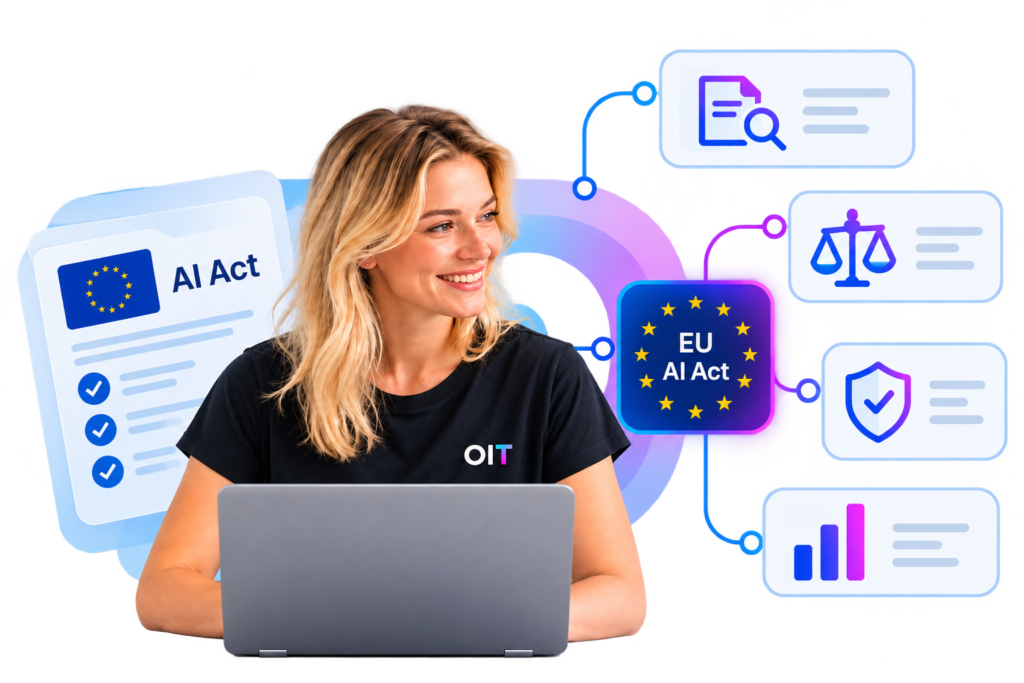
The EU AI Act establishes new requirements for the use of artificial intelligence. OIT helps companies classify AI applications, identify technical risks, and establish appropriate governance structures—ensuring that innovation and compliance go hand in hand.
Challenge
Where to start?
AI applications are often implemented without adequately assessing risks, responsibilities, and regulatory requirements. A lack of transparency and documentation makes it difficult to ensure their controlled use.
Solution
Let's figure out together what makes sense.
OIT analyzes existing AI applications, assists with technical risk assessments, and develops appropriate processes for documentation, access control, monitoring, and human oversight.
Advantages
Clarity Instead of AI Hype.
Greater transparency regarding the AI systems used, traceable decisions, clear lines of responsibility, and a solid foundation for meeting regulatory requirements.
EU AI Act
Using AI Responsibly – with OIT
Artificial intelligence is transforming business processes and decision-making. At the same time, the European AI Act imposes new requirements regarding transparency, security, and oversight. OIT helps companies technically evaluate AI applications, identify risks, and integrate regulatory requirements into existing processes. With AI expertise, software development, and IT security, OIT lays the foundation for the secure, controlled, and responsible use of AI.
Request AI Consulting Now
Contact
Where AI Governance Matters

AI Chatbots and Customer Service
Ensure transparency regarding AI interactions, control data access, and define clear escalation procedures for employees.

Human Resources and Hiring Processes
Review AI-based assessments for potential high-risk classifications and establish appropriate control and documentation processes.

Automated Business Processes
Make AI-driven decisions transparent and integrate technical oversight capabilities into existing systems.

Internal Knowledge Assistants
Protect confidential company data, take access rights into account, and manage the use of generative AI in a controlled manner.
Our AI Governance Services
AI Inventory and Risk Classification
Inventory of existing AI applications and initial technical classification based on intended use, risk profile, and regulatory relevance.
Governance and Responsibilities
Development of transparent approval processes, responsibilities, and internal guidelines for the controlled use of AI.
Technical Documentation and Transparency
Support for documenting AI systems, data flows, system boundaries, and technical control mechanisms.
Safety and Human Oversight
Implementation of technical measures for access controls, logging, monitoring, and options for human intervention.
FAQ
Does the EU AI Act also apply to small and medium-sized enterprises?
Yes. What matters is not the size of the company, but how AI is used and what role the company plays in that process. The use of external AI systems can also give rise to obligations.
Do companies have to review all AI applications?
A systematic assessment is useful for identifying relevant applications and determining potential obligations. Not every AI application is considered a high-risk system.
Which AI applications are considered high-risk?
This may include, for example, certain AI systems used in personnel selection, critical infrastructure, or medical products. The key factors are the legal criteria and the specific intended use.
What are the deadlines for the EU AI Act?
Many provisions are already in effect. The transparency requirements have generally been in effect since August 2026. The key high-risk regulations for use cases listed in Annex III take effect in December 2027, and for certain regulated products, in August 2028.
How does OIT provide support during implementation?
OIT provides support in conducting a technical assessment, classifying AI applications, and implementing security, documentation, and control mechanisms. The binding legal assessment is performed by appropriately qualified legal counsel.
Case studies
AI verifies 15,000 emails/hour for mid-sized companies
Track & Trace for pharmacy network
Self-service customer portal
Amelie - Chatbot
Meet Amelie.
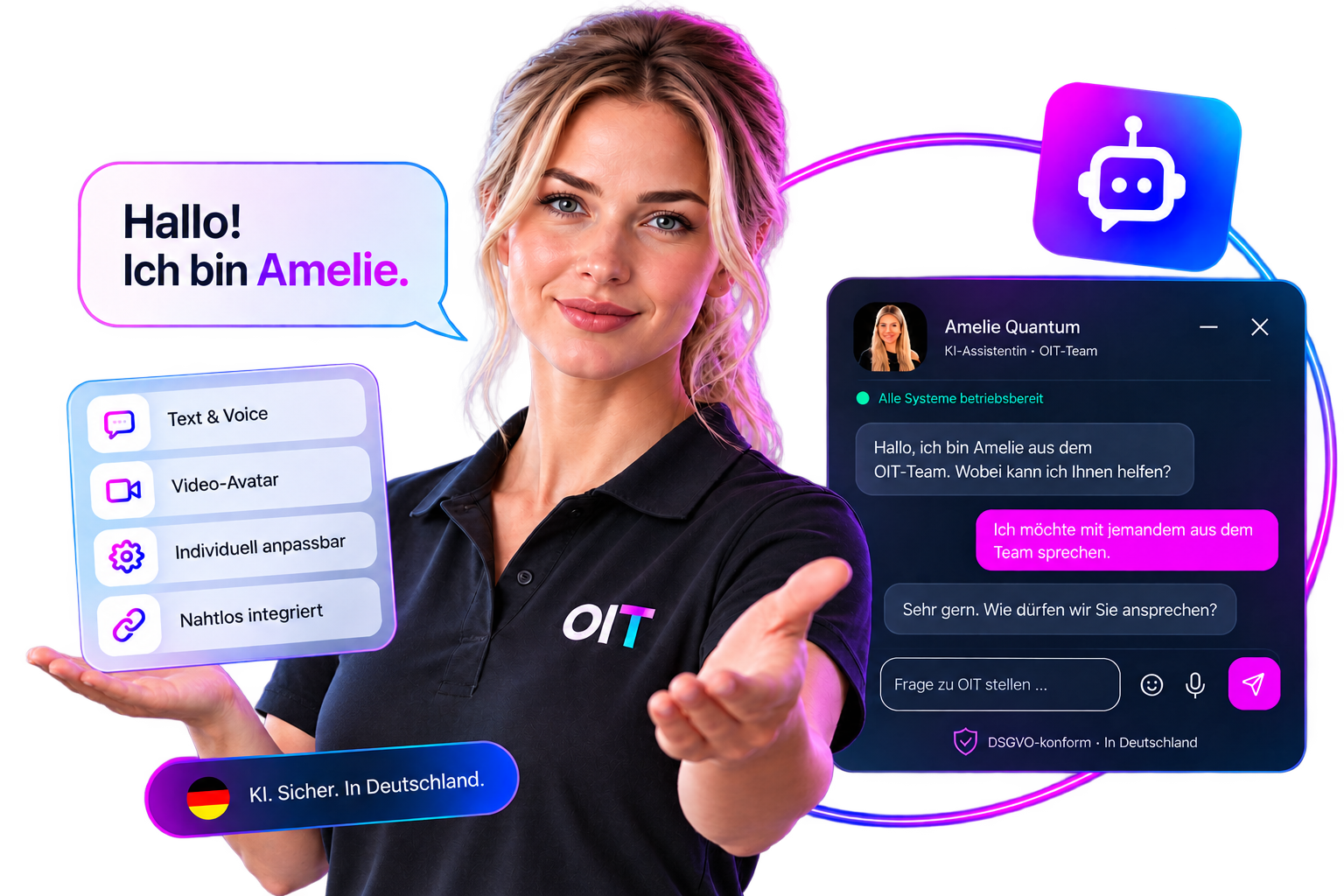
Amelie is more than just a chatbot: She communicates via text, voice, or video, draws on your company's knowledge, integrates with existing systems, and can initiate processes directly.
 German
 English